Monday, May 8, 2023

Now California's Bank Regulator Says They Also Dropped the Ball on Silicon Valley Bank

Click here to read the original Cautious Optimism Facebook post with comments

But we need a few thousand more regulations on top of the byzantine myriad of existing ones that oversight officials are already failing to keep up with.

-Signed, Cautious Optimism Economics Correspondent

"California's bank regulator said Monday that it was too slow to see the growing risks at Silicon Valley Bank and did not act forcefully enough to get the bank to fix its problems."

"A report from the California Department of Financial Protection and Innovation echoed similar findings in a Federal Reserve report looking at its own supervision of Silicon Valley Bank. The Fed was highly critical of its own role in the bank’s failure, saying its supervisors were also too slow or too unwilling to press the bank’s management to address issues."

Read "California's bank regulator finds own faults in bank's demise" at:

https://finance.yahoo.com/news/california-bank-regulator-finds-own-223152689.html

Tuesday, May 2, 2023

Future Prospects for the Global Reserve Dollar, Part 2: Military Power and the Petrodollar

Click here to read the original Cautious Optimism Facebook post with comments

"You have the global hegemon, the United States, which will provide a series of global public goods: free trade, capital mobility, lender of last resort, security and defense to Europe, to Japan, Korea, to the Middle East, you name it."

-Nouriel Roubini, aka "Doctor Doom"

6 MIN READ - The Cautious Correspondent for Economic Affairs and Other Egghead Stuff follows up future prospects for the dollar’s reserve currency status with a look at implications for the petrodollar and the role of military power.

If you haven’t already read the CO primer on what makes a leading global reserve currency, the Economics Correspondent recommends taking a few minutes to read at:

http://www.cautiouseconomics.com/2019/05/inflation-currencies03.html

http://www.cautiouseconomics.com/2019/05/inflation-currencies04.html

MILITARY POWER

It’s no coincidence that before World War I the global reserve dollar’s unambiguous predecessor was the British pound.

Unlike the US dollar, which obtained global reserve status de jure during the 1944 Bretton Woods conference, it’s not easy to pin a precise date on the British pound’s adoption.

But 1815 is a pretty good estimate, the year Napoleon was permanently vanquished at Waterloo and many historians regard as the beginning of the century-long era of Pax Britannica.

Although many believe military power allows a global hegemon to “force” other countries to use its currency the primary relevance of military power is the ability to guarantee the security of the currency regime itself and maintain open trade routes.

19th century British military might guaranteed the security of the pound. After 1815 few could envision a foreign army invading England, marching into London, and taking over the Bank of England and its gold reserves.

Likewise after 1944, and particularly after the invention of atomic weapons, few could envision a foreign army invading the USA, marching into Washington, DC and taking over both the Federal Reserve System and the USA’s official gold reserve holdings at Fort Knox, West Point, and the Denver Mint.

However the pound’s 19th century dominance was reinforced by British military power another way: If the world was going to rely on the pound to trade between nations then the Royal Navy would ensure the sea lanes stayed open to conduct business in pounds.

The U.S. Navy plays a similar role today, using its leading maritime power status to keep goods moving freely between nations—even non-American states, e.g. Japanese cars headed for Latin America or Saudi oil heading for Europe.

After all, what good is using the dollar to trade with other countries if your products can’t get there?

Hence today we see the U.S. Navy keeping sea lanes open that don’t even carry much product to the United States itself.

For example, although the U.S. has strategic interests in the South China Sea with allies like Taiwan, Singapore, Thailand, and a slightly more indecisive Philippines, not that much of the USA’s own merchandise navigates through that body of water.

But the U.S. feels committed to keep the South China Sea open for other countries to ship their cargo since they overwhelmingly use the dollar.

And America has been a pretty good steward of open maritime trade. The U.S. Navy, for example, doesn’t block oil shipments between Venezuela and China, or merchant shipping between Cuba and Russia, or even cargo between Venezuela and Iran (despite sanctions from other countries) even though U.S. relations with every one of those countries is strained.

Even during the Cuban Missile Crisis the American naval blockade only stopped and turned away ships carrying materials for the deployment of nuclear missiles. Soviet freighters carrying any other cargo—even defensive-only conventional weapons like tanks, MiG fighter aircraft, SAM missiles, and artillery—were allowed to pass and dock at Cuban ports just as they had for the previous sixteen months that Cuba and the USSR had cooperated in a military alliance. 

Now let’s consider what happens if the world adopts the Chinese RMB as the global reserve currency. If China builds a sufficiently powerful navy to patrol the world’s seas, do international governments trust Beijing to keep sea lanes open for commerce the same way the United States has?

If China doesn’t approve of how Japan is behaving, or the Philippines, or Malaysia or Australia, does anyone think the CCP will work 24/7 to keep all their sea lanes open? Or will the Chinese Navy neglect their trade routes or worse yet become the instigator of naval obstruction themselves?

And as Nouriel Roubini mentions, military sea power is a public good that the global hegemon provides in exchange for the world using its reserve currency. “Do business with our currency and we’ll keep the world open for business” is the unspoken agreement.

During Pax Britannica the Royal Navy provided that public good and during Pax Americana the U.S. Navy has provided it.

But when considering the prospects for a Pax China century the world’s governments may think twice about their reliance on the Chinese Navy to keep the world’s waterways open—particularly how fairly and evenly Beijing will police global sea lanes.

THE PETRODOLLAR

The Economics Correspondent hears a lot of talk about the petrodollar being the linchpin that keeps the entire crooked house of cards—the global reserve dollar—holding up.

Predictions are everywhere that if OPEC, or really just Saudi Arabia, abandons its pledge to accept payment for oil exclusively in dollars then it’s instant game over for the dollar's global reserve status.

The Economics Correspondent believes that, while a potential Saudi rejection of the dollar could only be harmful–both politically and economically—to the dollar’s world reserve status, predictions surrounding the degree of rejection are overblown and simple math says the same about any economic effects.

The recent story driving all this discussion is talks between Saudi Arabia—whose government is turned off by the Biden administration’s constant criticism and henpecking—and China about accepting some measure of RMB payment for its oil exports.

If such a deal went through then no doubt it would have a significant symbolic impact as the Saudis have insisted exclusively on dollars for half a century.

However, as covered in the previous post, no country trusts China enough to hold large reserve balances in RMB. The reasons are many including immaturity and untrustworthiness of Chinese securities markets, China’s continued use of capital controls, China’s continued manipulation of exchange rates, China’s insistence on trade surpluses (the opposite of what a reserve currency issuer needs to do), and the arbitrary power of an autocratic regime that has already shown no hesitation to abuse that power for even the tiniest perceived sleight.

So in the Economics Correspondent’s opinion, if Saudi Arabia did agree to accept some RMB payments for oil exports, the degree would be limited and mostly symbolic—probably enough to meet the kingdom’s most immediate import needs back from China itself and then perhaps a small reserve balance to serve as a political statement reflecting Riyadh’s “confidence” in its trading partner—all while the bulk of its real foreign reserves remains in dollars, euros, pounds, Swiss francs, and Japanese yen.

The other sobering reality is simple math. If Saudi Arabia were foolish enough to go all-in and accepted RMB payments for the entire 100% of its China oil exports, what impact would that have on the dollar’s global position?

Total global trade reached $32 trillion in 2022 which happened to also be a good year for oil prices.

Saudi Arabia’s total oil exports in 2022 were $326 billion, and of that 26% was sold to China.

Therefore, if Saudi Arabia agreed to sell 100% of its future oil to China in exchange for RMB instead of dollars, the impact would be ($326B x 0.26)/$32T = 0.26% of global trade.

As the dollar enjoys a 79.5% share of international payments, a complete Sino-Saudi RMB-for-oil deal would reduce the dollar’s global share from 79.5% to 79.24%.

However such a defection, while small as a share of global payments, could be more significant for its symbolic importance. Other smaller OPEC countries might follow suit, particularly if the Biden White House insults them enough times

But the Economics Correspondent believes any Saudi-China RMB-for-oil deal would not govern 100% of Saudi oil exports but rather just enough to make news headlines. Riyadh knows the realpolitik of its own finances and would never be willing to hold sizable shares of its hard-earned foreign reserves in a currency that can be controlled by a regime like the CCP.

Friday, April 28, 2023

First Republic and George Selgin on Bank Runs

Click here to read the original Cautious Optimism Facebook post with comments

Economist George Selgin
The Wall Street Journal is reporting that troubled San Francisco-based First Republic Bank is on the cusp of being seized by the FDIC and its assets sold to JP Morgan Chase and PNC Financial Group.

Read more at:

https://www.reuters.com/article/first-republic-ma-jp-morgan/jpmorgan-pnc-bid-to-buy-first-republic-as-part-of-fdic-takeover-wsj-idUSL1N36W00L

First Republic, which like Silicon Valley Bank invested heavily over long terms at very low interest rates, has suffered from massive depositor withdrawals over the last six weeks. In its recent quarterly SEC filing First Republic announced it has lost over $100 billion of its $176 billion in deposits during the first quarter (-57%) partially offset by a $30 billion deposit injection by a consortium of major banks.

In other words, First Republic was suffering from a slow-motion bank run.

At which point the Cautious Optimism Correspondent for Economic Affairs and Other Egghead Stuff would like to cite the wisdom of monetary economist George Selgin whom he has learned much from over the years.

Regarding the subject of depositors running on banks:

"Real life bank runs are seldom unprovoked. They're almost always runs on banks that are in trouble beforehand, that have been badly managed, that their loans are not performing, etc... 

".....They're not failing because they're being run upon. They're run upon because they're failing. And the runs have the desirable effect of shutting down the banks before they can pile up losses and cause even greater harm to their creditors..."

"...It's not random, it's depositors saying 'we hear you guys have blown it and we want to cash out.'"

-George Selgin

Wednesday, April 26, 2023

Future Prospects for the Global Reserve Dollar, Part 1: The Chinese Yuan is Still Not About to Replace the Dollar

Click here to read the original Cautious Optimism Facebook post with comments

“China might become the major economic power, but if they want their currency to be the [global] reserve currency, as we know they have to have flexible exchange rates, they have to have elimination of capital controls, they have to have a deep and liquid market for their own currency—domestic and foreign—and they have to liberalize their financial system and make it safer and so on so on, and right now they're going in the other direction."

-Nouriel Roubini, aka. "Doctor Doom"

5 MIN READ - The Cautious Optimism Correspondent for Economic Affairs and Other Egghead Stuff finds himself in the unusual position of defending the US fiat dollar—which he’s simultaneously a critic of—from the recent barrage of news opinions predicting its global reserve currency status is on the brink of collapse.

With a salvo of bad news for the U.S. dollar—high inflation, soaring fiscal deficits, and several countries signing limited bilateral currency agreements with China—a flurry of opinion pieces have hit the news predicting that the imminent collapse of the global reserve dollar is right around the corner.

While none of the recent developments can be considered positive for the dollar the Economics Correspondent believes that:

1) The dollar’s status as leading global reserve currency isn’t going away anytime soon

2) The dollar’s share of foreign reserve holdings has long been on a slow, nonlinear, multi-decade decline (73% in 1965 to 60% today) for a very different set of reasons and that gradual decline will continue.

3) Most predictions of imminent dollar collapse are being made by people with poor understanding of what reserve currencies are and how they are chosen, and many of the same people have predicted the immediate death of the dollar every day for at least the last fifteen years and/or been selling gold or Bitcoin for nearly as long.

The question of what makes a global reserve currency the most popular medium of exchange between nations is more complicated than “the petrodollar is holding the whole thing up” or “Russia is going to trade in Chinese yuan now.” 

An adequate understanding requires an explanation that might require, oh… twelve minutes of reading.

That’s not much of an investment to gain an underlying understanding of global reserve currencies is it?

Well it happens the Economics Correspondent posted just such a writeup three years ago right here at Cautious Optimism. Anyone who wants to make only a small time investment can’t do much better for a brief education on reserve currencies at:

http://www.cautiouseconomics.com/2019/05/inflation-currencies03.html

http://www.cautiouseconomics.com/2019/05/inflation-currencies04.html

To whet readers’ appetites with just a few teasers (much more in the linked articles), the ideal and most sought-after global reserve currency will exhibit at least eleven traits:

1. Incumbency and the largest network effect

2. A large economic zone

3. Large, developed, liquid securities markets

4. Trusted, transparent, and regulated securities markets

5. A commitment to low inflation

6. No capital controls

7. Free/floating exchange rates

8. Consistent trade deficits

9. Democracy or at minimum some political liberalization

10. Military superpower status

11. A lender of last resort central bank

The U.S. dollar with all its warts has done a better job, a far better job, of offering all eleven for over forty years. The next closest competitor has been the euro which still has problems with trade surpluses, military superpower status, incumbency, and doubts about government securities issued by periphery states like Greece, Spain, Portugal, and Italy.

And how about recent events?

Anyone who hasn’t been in a coma the last two years knows the dollar has stumbled on one requirement—low inflation—and the threat of the world’s central banks scoffing over inflation is just one more reason the Fed has taken getting it under control so seriously.

However where the dollar has gotten lucky is that nearly all other western central banks, plus a few eastern ones, have made the same inflation mistake with their own currencies, leveling the playing field.

The dollar’s continued acceptance has truly been a case of remaining the least dirty shirt in the laundry basket—even with all of the Biden administration’s recent unforced policy errors.

And what about China? Isn’t the Chinese renminbi (RMB aka. yuan) moving in to replace the dollar by the end of the year?

Well not only does the RMB fail miserably in the trustworthiness and transparency of its still-developing securities markets, not only does China still impose capital controls on investment flows, not only does the CCP insist on running consistent trade surpluses, and not only does Beijing still manipulate the RMB’s exchange rate—insurmountable problems all—but China’s political system also sows sufficient distrust for nations to avoid holding large balances of reserves in RMB or RMB-denominated assets.

Despite all the talk about Russia, Saudi Arabia, and BRICS countries discussing or agreeing to some level of bilateral trade using Chinese RMB, no one is going to convert the greater part of their hard-earned foreign reserves into Chinese currency other than symbolic balances used to make pointed political criticisms of the United States.

Consider that China’s dictatorship already stops western movies, western companies, and western investment from freely flowing into its markets if any company or a single sports league owner criticizes just one aspect of the regime. And if the Taiwan flag isn’t digitally removed from Tom Cruise’s bomber jacket, Top Gun Maverick is banned from Chinese theaters.

Now imagine you’re a central banker, finance minister, or sovereign wealth fund manager responsible for hundreds of billions of dollars in global reserves that your citizens have sweated for years to earn by producing and selling real goods and services for export.

Will you trust converting those reserves to RMB and parking them in Chinese securities markets? Where a corruption scandal can wipe out their value overnight? Where the CCP can slap down capital controls and lock down your money anytime they please? Where Beijing can intervene in foreign exchange markets and devalue you into a 10% of 15% haircut overnight? Or Xi Jinping can arbitrarily seize your financial assets if he wakes up one morning in a bad mood?

China is already in the habit of using its economic power to punish western companies and even small countries for the tiniest perceived sleight. So are they going to become less aggressive one day when they're the world’s largest economy and control the premier reserve currency? 

It doesn’t take much imagination to predict what will happen to your country’s hundreds of billions of dollars—or trillion-plus RMB—in foreign reserves if you displease the CCP.

Foreign governments, even those who publicly talk about friendly alliances with China, already know this. Even fellow autocracies that publicly broadcast their "limitless" friendship with China are smart enough to know when it comes to their money there will definitely be limits.

The US by contrast, while not angelic in its application of reserve dollar power, is far more trusted by world central banks. A perfect example is China itself whose relations with the USA are now more acrimonious than at any time since Mao Zedong. Yet even Beijing still trusts the USA enough to hold well over  $1 trillion in dollar reserves and assets, even after unleashing Covid upon America and angering Washington with its spy balloons.

If the shoe was on the other foot can anyone really see countries that offend China trusting the RMB in case their relationship goes south?

This explains in part why the Chinese yuan, despite being issued by the world’s second largest economy, maintains a 3% share of global reserve holdings compared to 60% for the dollar and 20% for the euro.

It's also why the Economics Correspondent predicts that while non-aligned countries like Saudi Arabia and Brazil announce agreements to trade in RMB, they will likely accept only enough RMB as payment for exports to meet their immediate purchasing/import needs from China and perhaps a tiny/symbolic amount in reserve—the rest being held in more trustworthy currencies like the pound, Swiss franc, yen, Canadian and Australian dollar, and mostly still the US dollar.

And yes, all this even as the Biden administration’s weak foreign policy, deficit-bloating fiscal policy, and Federal Reserve screwups nudge more countries slightly further away from the dollar—but not nearly enough to compensate for the glaring deficiencies of other competing currencies.

Anyway the Economics Correspondent highly recommends reading his 2019 columns on how the world chooses a currency to serve as its preferred reserve holding. In fact he wishes many of the columnists who have been predicting the imminent collapse of the global reserve dollar every day for the last fifteen years, some of whom he usually agrees with, would learn some of those basics themselves.

Another column or two will follow to address a few more recent global reserve dollar issues: the always-mentioned “petrodollar,” the role of the U.S. military, the prospect of competing gold-backed currencies, and the much longer-term.

Saturday, April 15, 2023

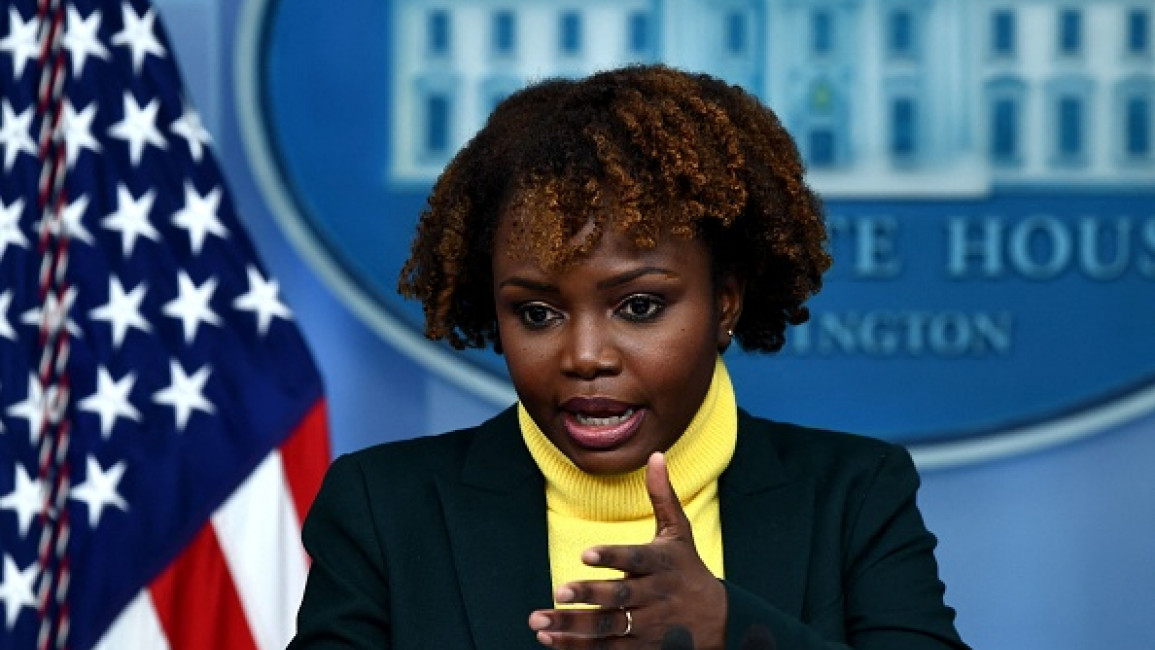
Karine Jean-Pierre: "We Are Not Headed To a Recession or a Pre-Recession"

Click here to read the original Cautious Optimism Facebook post with comments

Karine Jean-Pierre
“White House Press Secretary Karine Jean-Pierre said job numbers and consumer spending are strong and chalked it up to President Joe Biden's economic plans, waving off a recession risk. ‘We're seeing the success of his plans… …Those are the indicators that show us that we are not headed to a recession or a pre-recession,’ she said.”

In the words of her slightly less clueless predecessor, the Cautious Optimism Correspondent for Economic Affairs suggests we “circle back” to KJP in a year and see how her prediction plays out.

Read more at:

https://www.bloomberg.com/news/articles/2023-04-13/white-house-rejects-fed-staff-outlook-says-no-sign-of-recession

Tuesday, April 11, 2023

Yellen Confirms Average $1.7 Trillion Deficits for the Next Decade

Click here to read the original Cautious Optimism Facebook post with comments

Sen. Ron Johnson (R-WI)
Two months ago the Cautious Optimism Correspondent for Economic Affairs and Other Egghead Stuff posted two articles using cruel math to predict the federal government will run $1+ trillion deficits in perpetuity and could easily run average deficits of $1.8 trillion for the next decade.

“The federal government can actually run even higher deficits - $1.81 trillion for the next decade - and the debt-to-GDP ratio will remain unchanged at 120.7%.”

-Cautious Optimism, February 15, 2023

The math is simple: between real economic growth and the Fed’s deliberate price inflation politicians and policymakers expect nominal GDP and tax revenues to grow significantly in the future, thereby allowing them to run bigger and bigger deficits forever.

Therefore the debt-to-nominal GDP ratio will remain fairly stable or rise slowly, enabled by both the U.S. economy producing more stuff and the central bank printing enough excess money every year to continuously drive up prices.

What the Economics Correspondent didn’t know was that a month later Treasury Secretary Janet Yellen would not only publicly confirm this prediction, but do it so openly and unabashedly.

From her Senate Finance Committee testimony of March 16, 2023:

Senator Ron Johnson (R-WI): So now you’re here to testify about the president’s budget. How much are the total deficits over that ten-year period according to the president’s budget?

Treasury Secretary Janet Yellen: (silent as she flips through pages of documents)

Johnson: You don’t know that off the top of your head?

Yellen: Umm (keeps checking documents)

Johnson: I’m running out of time. It’s $17 trillion, OK?

Yellen: Yes.

Johnson: You’re going to drive the debt from somewhere around $32 trillion up to about $50 trillion, correct?

Yellen: Yes, but what I believe is the single most important metric for judging the fiscal stance of the country is real net interest as a share of GDP. We have a large GDP.

Johnson: So are you concerned when you take the debt from $32 trillion to $50 trillion, are you concerned who’s going to buy that debt? And also at what rate they’ll expect to be compensated for buying riskier and riskier debt? Are you concerned about that?

Yellen: Well, if the net interest… real net interest costs of the debt remains low relative to GDP and we’re on a sustainable fiscal course…

Johnson: Well we’re not on a sustainable path.

Yes, you heard it from Yellen herself folks. The Biden budget is designed to deliberately accumulate a national debt of $50 trillion by 2033.
====

ps. The New York Times headlines Biden’s very same budget with “Biden Is Set to Detail Nearly $3 Trillion in Measures to Reduce Deficits.”

NPR: “Biden budget proposal to show nearly $3 trillion in deficit reduction over 10 years.”

Los Angeles Times: “Biden budget aims to cut deficits nearly $3 trillion over 10 years.”

ABC News: “Biden budget aims to cut deficits nearly $3T over 10 years.”

CBS News: “Biden's budget plan aims to cut federal deficit by $3 trillion.”

CNN: “Biden to propose cutting the deficits by nearly $3 trillion.”

Sunday, April 9, 2023

U.S. Banks With Largest Held-to-Maturity Losses

Click here to read the original Cautious Optimism Facebook post with comments

 From the Cautious Optimism Correspondent for Economic Affairs and Other Egghead Stuff: A list of America's top banks with the largest held-to-maturity securities losses as a share of their equity capital buffer (click to enlarge and see rightmost column: "Perc").

The Correspondent's memory of Common Equity Tier 1 (CET1) capital ratios is a bit old, but he recalls around the 2008 financial crisis if a bank's ratio of equity capital to risk-weighted-assets was more than 8% it was considered "well capitalized" by regulators.

6%-8% was "adequately capitalized."

4%-6% and regulators ordered the bank to immediately raise money and recapitalize.

Under 4% and the bank was immediately seized by regulators and sold off or wound down.

Any CO readers who work with bank regulators and know updated CET1 capital ratio rules for the year 2023 feel free to share in the comments section.

Basel III rules apply higher capital ratio premiums to GSIB banks like JP Morgan Chase, HSBC, BNP Paribas, or Mitsubishi UFJ to name a few.